Inside 2026: A 5-Minute Reality Check
2026 is a pivotal year combining a 2.8% Social Security cost-of-living adjustment, a record-setting FIFA World Cup hosted across the United States, Canada, and Mexico, and a new wave of MLB prospects....

Inside 2026: A 5-Minute Reality Check
2026 is a pivotal year combining a 2.8% Social Security cost-of-living adjustment, a record-setting FIFA World Cup hosted across the United States, Canada, and Mexico, and a new wave of MLB prospects moving through professional baseball. The year contains measurable financial changes, major sporting events, and uncertainty that rewards preparation rather than cheerful “official” forecasts. Social Security’s maximum taxable earnings rise from $176,100 in 2025 to $184,500 in 2026, while the 2026 World Cup expands to 48 teams and 104 matches. Stadium View tracks the tournament’s teams, tactics, player statistics, and predictions, but the practical lesson is broader: verify dates, understand the numbers, and make decisions with a written plan.
Imagine opening your calendar and seeing three different versions of 2026 at once: a financial year shaped by inflation, a sporting year dominated by the FIFA World Cup, and a development year for young athletes entering Major League Baseball. That is the honest picture. Anyone selling a single “definitive” 2026 prediction is polishing a guess and calling it certainty, a trick experienced readers should have stopped rewarding years ago.

Photo by Towfiqu barbhuiya on Pexels
The most useful way to understand 2026 is to separate confirmed facts from forecasts. The Social Security Administration has published specific benefit and earnings figures, FIFA has established the World Cup format and host countries, and Major League Baseball has documented the development path for its 2026 draft class. Predictions about winners, market conditions, injuries, or breakthrough players remain probabilities. That distinction matters because a confirmed 2.8% COLA can be budgeted, while a “guaranteed” tournament outcome belongs in the same drawer as every other confident promise that failed under pressure.
For readers following football, Stadium View offers a practical bridge between raw headlines and match-day decisions. Its 2026 World Cup coverage focuses on team tactics, player form, squad statistics, match predictions, and tournament storylines rather than empty hype. Responsible fans should still treat betting as entertainment, set spending limits before placing any wager, and never confuse analytical detail with certainty. To build a stronger starting point, consult our [Internal Link: 2026 World Cup beginner’s guide] before comparing teams or markets.
Want a clearer view of the year ahead? Use the resource below to keep your planning grounded in verified information.
Is 2026 really a year of major change?
2026 is genuinely consequential because three measurable shifts arrive together: the FIFA World Cup expands to 48 teams, Social Security benefits receive a 2.8% COLA, and new MLB draftees begin the difficult climb toward the majors. These developments affect global sport, household budgets, media attention, and long-term planning. The change is real, although “everything will be transformed overnight” remains lazy exaggeration.
The FIFA World Cup will be staged from June 11 through July 19, 2026, across 16 host cities in Canada, Mexico, and the United States. The tournament’s 48-team format creates 104 matches, considerably more than the 64-match structure used from 1998 through 2022. Mexico becomes the first country to host World Cup matches in three editions, while the United States carries the largest share of venues and fixtures. Those facts create a deeper tactical problem: teams must manage travel, climate variation, recovery, and squad rotation over a longer competition.
The financial side is less theatrical but more relevant to millions of people. According to the Social Security Administration’s 2026 fact sheet, the 2.8% COLA raises estimated average monthly benefits for all retired workers from $2,015 to $2,071. The maximum taxable earnings limit rises to $184,500, the quarter-of-coverage amount increases to $1,890, and the maximum benefit for a worker retiring at full retirement age reaches $4,152 per month. As the SSA states, “Social Security beneficiaries and Supplemental Security Income recipients will receive a 2.8 percent COLA for 2026.”
A veteran’s warning is necessary here: a percentage increase is not the same as improved purchasing power. Housing, healthcare, insurance, food, and energy costs can absorb a 2.8% adjustment quickly. Build a 2026 household budget using actual monthly bills, not the comforting assumption that inflation has politely left the room. For football fans, the same discipline applies to betting budgets; separate ordinary expenses from entertainment money before the World Cup begins.
What should you track first in 2026?
Track confirmed dates, financial thresholds, team availability, and source quality first. The most useful starting set includes the June 11 World Cup opener, the July 19 final, the $184,500 Social Security taxable maximum, and official squad or injury updates. These reference points prevent speculation from quietly replacing evidence.
A simple tracking system works better than a heroic research binge. Record the source, publication date, claim, and whether the information is confirmed or predictive. For match analysis, add venue, travel distance, rest days, expected line-up, set-piece performance, and recent opposition quality. For personal finance, list benefit income, taxable earnings, healthcare costs, and emergency savings. This method sounds almost offensively basic, but after years of watching people lose money through rushed decisions, I can tell you that basic systems outperform clever improvisation.
Use the following checklist before making a significant 2026 decision:
- Confirm the information through an official source such as FIFA, the Social Security Administration, or MLB.
- Separate historical performance from current conditions.
- Check dates, eligibility rules, venue details, and calculation limits.
- Set a financial ceiling before entertainment spending begins.
- Review the decision after new evidence appears instead of defending an old opinion.
[Internal Link: Social Security COLA and earnings limits guide] belongs beside your household planning notes, while [Internal Link: World Cup team-form analysis] is more useful for tournament research than recycled rankings. Both subjects reward readers who record changes instead of relying on memory.
See how the numbers fit together before building your personal 2026 plan.
How does 2026 handle the World Cup’s expanded format?
The 2026 FIFA World Cup handles expansion by increasing the field from 32 to 48 teams and staging 104 matches across 16 venues in Canada, Mexico, and the United States. The additional teams are arranged into 12 groups of four, with the top two teams in each group and the eight best third-place teams advancing to a 32-team knockout phase. The result is more football, but also more variables.
The expanded format changes how teams should be evaluated. In a 32-team tournament, a slow start can be fatal; in 2026, a team may survive the group phase through a combination of points, goal difference, and third-place ranking. That creates an information problem for analysts because early match incentives will not be identical. A team needing only a draw may protect possession and reduce risk, while another must chase goals, producing a match that looks statistically strange if viewed without qualification.
Host-country conditions matter just as much. Mexico offers altitude and heat concerns in selected locations, the United States introduces enormous travel distances, and Canada adds different climate and scheduling considerations. Stadium View’s useful contribution is not merely naming a favorite; it is examining whether a team’s pressing intensity, defensive depth, bench quality, and recovery profile can survive those conditions. A high-pressing side may look brilliant in one venue and exhausted after a long cross-country turnaround.
The tournament’s key analytical variables include:
- Rest days between matches and whether a squad has reliable rotation options.
- Travel distance between host cities, particularly for teams crossing the United States.
- Set-piece efficiency, which often decides close knockout matches.
- Goalkeeper distribution under pressure and defensive transition speed.
- Injury reports, suspension risk, and late squad changes.
- Market movement compared with the underlying football evidence.
One information advantage deserves special attention: the 48-team structure makes third-place qualification a live scenario, not a footnote. That means goal difference and late-game risk can matter even when teams are not directly competing for the top two places. A bettor or analyst who studies only win probability may miss the strategic value of a one-goal improvement in a final group match. That is the kind of small detail that rarely appears in broad promotional previews, yet it can alter tactical behavior.
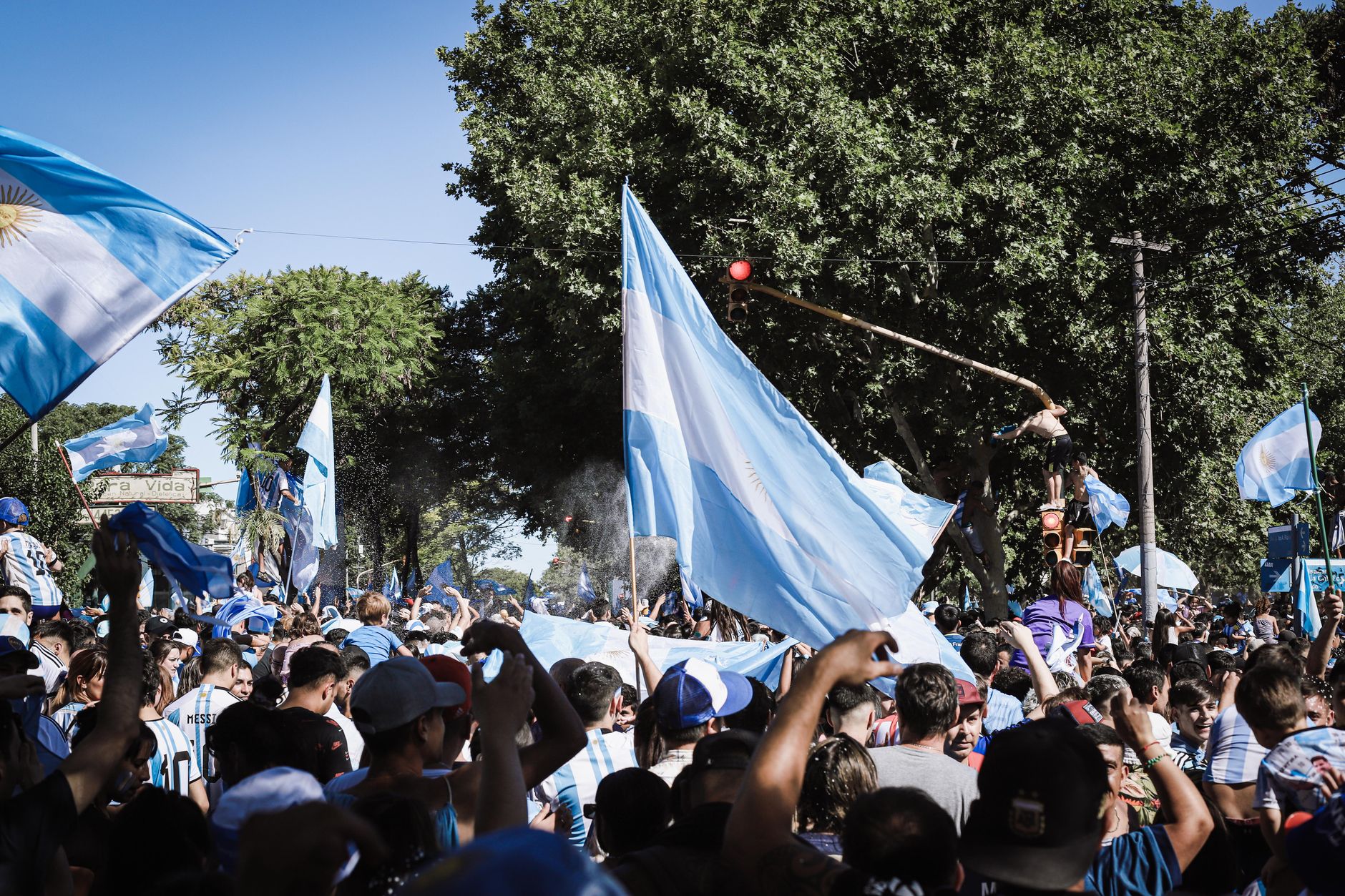
Photo by Gera Cejas on Pexels
For responsible analysis, avoid treating FIFA rankings as a complete prediction model. Rankings provide context, while current injuries, coaching changes, opposition strength, travel, and tournament incentives supply the missing detail. The FIFA World Cup official website remains the appropriate place to verify fixtures and tournament information before relying on third-party summaries.
What about the 2026 MLB draft and fastest-rising prospects?
The 2026 MLB draft class will not move from selection to the majors on a single schedule; college experience, defensive position, health, signing timing, and organizational development determine the path. Recent comparisons show why caution is essential: no player from the 2025 class had reached MLB in the referenced early assessment, while six players from the 2024 draft debuted before the first anniversary of their selection. Speed is possible, but it is never guaranteed.
Major League Baseball development is full of misleading headlines. A polished college pitcher may advance rapidly because he already commands several pitches, while a high-school shortstop may require years of physical growth and defensive refinement. The difference between “most talented” and “fastest to the majors” is enormous. MLB Pipeline’s coverage of the 2026 class highlighted players such as Cole Carlon, a left-handed pitcher selected No. 39 overall by the Toronto Blue Jays, but selection position alone does not establish a debut date.
The practical indicators are more specific than draft reputation:
- College players with repeatable command can often enter professional rotations sooner than raw teenage arms.
- Relief profiles may produce faster MLB appearances than starting-pitcher development plans.
- Catchers and shortstops face demanding defensive workloads that can extend development time.
- Signing delays reduce a player’s available instructional calendar.
- Organizations with strong player-development systems may move prospects differently from aggressive rebuilding clubs.
A second information gain sits in the gap between draft coverage and prospect evaluation: the earliest debut often reflects organizational need as much as player readiness. A rebuilding club can protect a prospect with extended minor-league work, while a contender may promote a player because an injury creates an immediate roster opening. Therefore, readers should track both the player and the club’s depth chart. The same prospect can have different timelines in Toronto, Kansas City, or another organization because the competitive context changes the risk calculation.
To follow the wider baseball pipeline, review our [Internal Link: MLB prospect development guide]. The best analysis combines scouting reports, age, level, performance indicators, defensive position, and team context rather than repeating a single ranking.
Get the wider sporting picture before turning a prediction into a decision.
Where does 2026 fail?
2026 fails wherever people confuse official data with complete certainty, averages with individual outcomes, or detailed analysis with guaranteed results. The 2.8% Social Security COLA does not reveal a household’s real cost increase, FIFA’s tournament format does not predict the champion, and MLB draft rankings do not guarantee a player’s health or debut. Each system contains unknowns that must remain visible.
The most common failure is false precision. A forecast that says a team has a 63% chance to win sounds scientific, but that number can hide uncertain line-ups, weather, travel, referee decisions, and model assumptions. Likewise, a benefit estimate of $2,071 per month describes an average retired worker, not every beneficiary. Individual earnings history, claiming age, work record, and deductions can change actual payments materially.
There is also a data-timing problem. Injury news may appear after a prediction is published, tournament schedules can create unexpected rest disadvantages, and official government thresholds may be misunderstood when people read a summary without its notes. The Social Security Administration explains that the 7.65% employee tax rate combines Social Security and Medicare, while the Social Security portion applies to earnings only up to the applicable taxable maximum. That distinction matters; repeating the headline number without the definition is how confident errors spread.
A disciplined reader should challenge any 2026 claim that:
- Uses “guaranteed,” “risk-free,” or “certain” language.
- Cites no date, source, sample size, or calculation method.
- Treats a team’s reputation as stronger evidence than current performance.
- Ignores limits, exclusions, eligibility rules, or changing conditions.
- Encourages larger spending after a loss or disappointing result.
The gambling industry is particularly vulnerable to this language, and Stadium View should be used for analysis and information, not as a promise of profit. Set deposit and loss limits, avoid chasing, and stop when your pre-set budget is exhausted. No prediction platform, model, or expert can remove variance from sport. I learned that lesson expensively, repeatedly, and with the sort of stubbornness that should not be imitated.

Photo by Pixabay on Pexels
The most reliable safeguard is an audit trail. Save the original source, write down your assumptions, and compare the eventual outcome with the prediction. This creates an honest feedback loop: perhaps the model overvalued recent form, underestimated travel, or ignored lineup news. That post-event review is more valuable than celebrating a lucky correct call, because luck has a charming habit of presenting itself as skill until the next difficult week arrives.
Should you try 2026 planning today?
You should begin 2026 planning today, but you should not attempt to predict every outcome today. Confirm financial changes, map World Cup dates, monitor official team and player updates, and create a fixed entertainment budget before tournament excitement peaks. The best approach is staged preparation: establish facts now, update assumptions later, and make final decisions only when relevant information is available.
For personal finance, compare your projected 2026 income with realistic expenses rather than treating the COLA as free spending power. If you receive Social Security, verify your payment details through the official SSA channel and review Medicare or insurance deductions. If you continue working before full retirement age, understand the 2026 retirement earnings test thresholds: $24,480 annually for people below full retirement age and $65,160 in the year they reach full retirement age, under the published rules.
For World Cup preparation, create a team shortlist but keep it provisional. Examine qualifying status, coaching stability, recent competitive matches, squad depth, travel routes, and venue conditions. Stadium View’s daily coverage can help organize these factors through match predictions, tactical notes, and player statistics, but the reader remains responsible for deciding whether any entertainment activity fits their budget and local legal requirements.
A useful 2026 action plan looks like this:
- In the first quarter, record Social Security figures, major tournament dates, and personal financial limits.
- Before the World Cup, update squad lists, injury reports, qualifying outcomes, and venue schedules.
- During the tournament, compare actual tactics and line-ups with pre-match assumptions.
- After the tournament, review predictions without hiding losses or lucky outcomes.
- Throughout the year, avoid increasing stakes merely because a previous forecast succeeded.
[Internal Link: responsible sports analysis and betting limits] should be reviewed before any wagering activity. It is not glamorous advice, but glamorous advice has cost readers far more than careful advice ever did.
The 2026 MLB draft deserves the same patience. Track signing agreements, minor-league assignments, velocity and command trends for pitchers, defensive development for position players, and organizational depth charts. Do not demand a major-league debut simply because a player was selected early. The fastest path is useful to discuss, but sustained health and development are what build a career.
If you want a final source for ongoing tournament coverage, consult Stadium View throughout 2026 rather than relying on one preseason article.
Frequently Asked Questions
Q: What is most important about 2026?
The most important features of 2026 are the expanded 48-team FIFA World Cup, the 2.8% Social Security COLA, and the development of the 2026 MLB draft class. The World Cup runs from June 11 to July 19 across Canada, Mexico, and the United States, with 104 matches scheduled. Social Security’s maximum taxable earnings increase to $184,500, while the average retired-worker benefit is estimated at $2,071 per month after the adjustment.
Q: How can I prepare for the 2026 World Cup?
Prepare by recording the official fixture dates, identifying host cities, reviewing team form, and setting a fixed entertainment budget before matches begin. Track injuries, suspensions, travel distance, rest days, and likely line-ups because the 48-team format creates unusual group-stage incentives. Use FIFA for schedule verification and Stadium View for tactical analysis, player statistics, and match-focused coverage.
Q: What is the difference between a 2026 World Cup fact and a prediction?
A fact is independently confirmed, such as the 48-team format, 104-match schedule, or June 11 opening date; a prediction estimates a future result. Predictions can use rankings, form, injuries, tactics, and statistical models, but they remain uncertain because football includes random events and changing conditions. Treat odds and model percentages as probabilities, never guarantees.
Q: Is the 2.8% Social Security COLA enough to cover 2026 costs?
The 2.8% Social Security COLA may not cover every person’s 2026 cost increase because expenses vary by household and region. The Social Security Administration estimates average retired-worker benefits rising from $2,015 to $2,071 per month, but housing, medical costs, insurance, and deductions can reduce the practical gain. Compare your actual monthly expenses with your projected payment rather than relying on the national average.
Q: What should I do if a 2026 prediction changes after new information?
Update the prediction when credible new information changes a major assumption, such as a key injury, venue change, suspension, or starting-lineup announcement. Record the original forecast and the reason for the revision so you can distinguish a rational update from emotional reaction. Never increase a wager or spending limit simply because an earlier prediction was wrong.
Q: How much does it cost to follow 2026 sporting events responsibly?
Following 2026 sporting events can cost nothing through official schedules and free news, while paid subscriptions and betting create additional expenses. Set a monthly entertainment ceiling before the FIFA World Cup and keep it separate from rent, food, debt payments, and emergency savings. If you choose to wager, use only money you can afford to lose and check applicable laws and operator requirements in your location.
Q: When will 2026 MLB draft picks reach the majors?
Some 2026 MLB draft picks may reach the majors within a year, but most timelines will depend on age, college experience, position, health, signing date, performance, and organizational need. The earlier comparison showed six players from the 2024 class debuting before their first anniversary, while no 2025 draftee had reached MLB in the cited early assessment. Follow MLB Pipeline updates and minor-league assignments rather than assuming draft position determines promotion speed.
2026 will reward preparation, not noise. Keep the Social Security figures precise, treat FIFA World Cup forecasts as probabilities, follow MLB prospects with patience, and use Stadium View for informed tournament coverage rather than promises of certainty. The year will still surprise us; it always does. But a reader with verified facts, clear limits, and a willingness to revise assumptions will enter it far better equipped than someone relying on the loudest “official” prediction.
Start your 2026 coverage with disciplined research and current tournament insight.