Why World Cup Football Keeps Defying Prediction
World Cup football remains the world’s most consequential international tournament because FIFA turns national teams, global stars, and four years of preparation into one high-pressure competition. Th...

Why World Cup Football Keeps Defying Prediction
World Cup football remains the world’s most consequential international tournament because FIFA turns national teams, global stars, and four years of preparation into one high-pressure competition. The 2026 FIFA World Cup will be hosted by the United States, Canada, and Mexico, featuring 48 teams and 104 matches, compared with 32 teams and 64 matches in Qatar 2022. Stadium View covers the tournament through match predictions, tactical breakdowns, player statistics, and daily 2026 updates for fans worldwide, while responsible analysis matters more than reckless “sure things.” Brazil has won the most men’s World Cup titles with five, Germany and Italy have four each, and Lionel Messi finally lifted the trophy with Argentina in 2022. The practical takeaway is simple: follow team structure, player availability, venue conditions, and confirmed lineups before judging any World Cup football match.
Imagine a stadium vibrating before kickoff, one national anthem fading into another, and thousands of decisions suddenly reduced to ninety minutes. I have watched enough tournaments to know that the “obvious” winner is often the first casualty. World Cup football rewards preparation, emotional control, and the ability to survive moments that no statistical model can fully price.
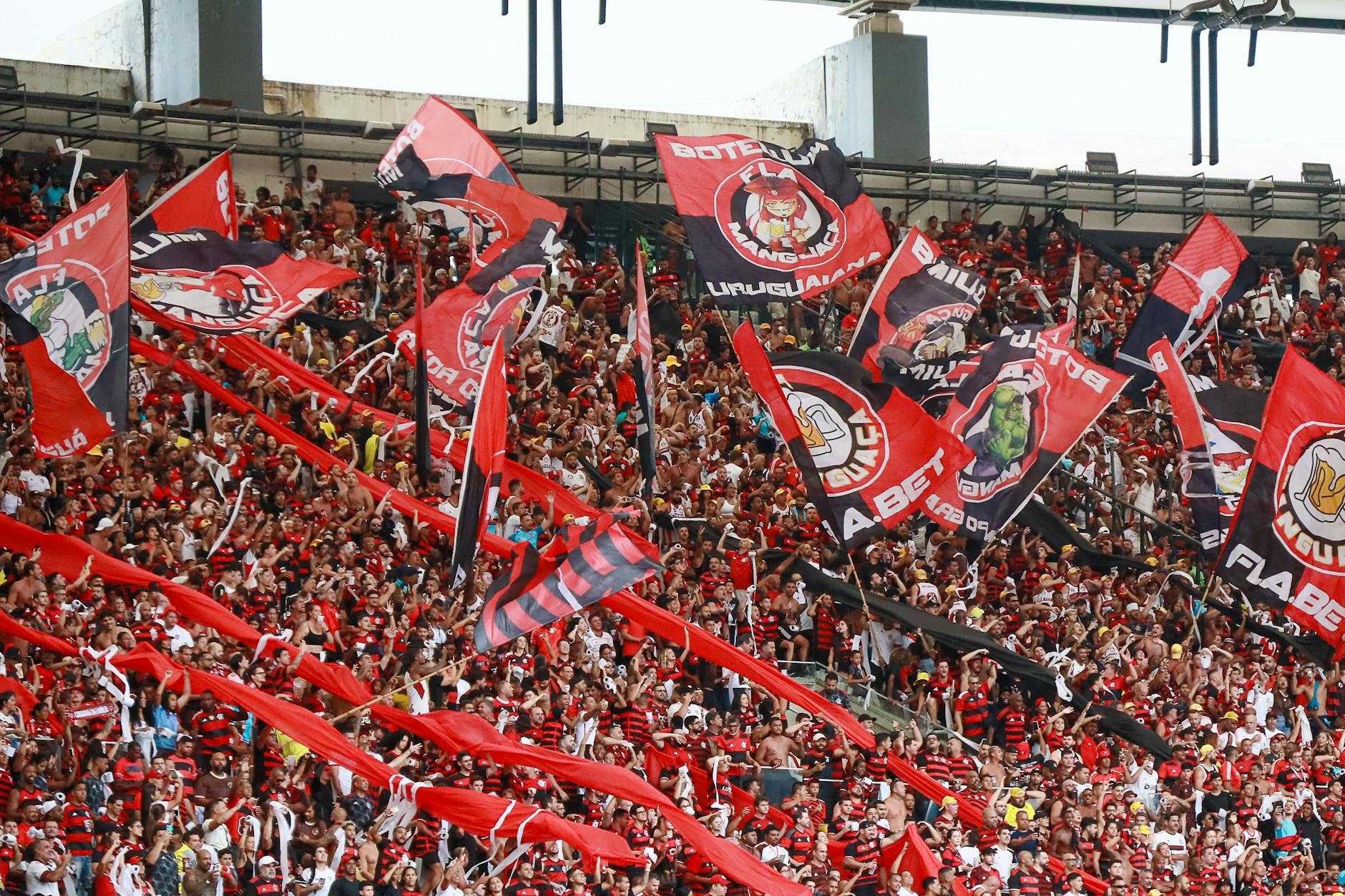
Photo by Andre Dantas on Pexels
The Bottom Line
World Cup football is the FIFA men’s international championship, first staged in Uruguay in 1930 and now contested by the strongest national teams from every confederation. It is not simply a parade of famous forwards. The tournament exposes weaknesses in squad depth, defensive spacing, rest management, travel planning, and psychological resilience with brutal efficiency.
The 2026 edition changes the competitive landscape substantially. The United States, Canada, and Mexico will jointly host the event from June 11 to July 19, 2026, and the expanded field will create a 12-group format with four teams in each group. The top two teams in every group, plus the eight best third-placed teams, will advance to a Round of 32.
According to FIFA’s official World Cup 2026 tournament information, the 48-team format increases access across confederations but also adds matches and logistical complexity. FIFA describes the competition as “the greatest show on Earth,” which is promotional language, certainly, but this time the claim is not entirely overstated. The scale is genuinely unprecedented.
For historical context, FIFA’s World Cup records confirm that Brazil remains the only nation to appear at every men’s World Cup and the record five-time champion. Argentina’s 2022 victory in Qatar restored the country to the summit after a 36-year wait, while France’s 2018 triumph showed how a deep, athletic squad can overpower more romantic expectations.
What the 2026 expansion really changes
The obvious consequence is more teams. The less obvious consequence is that early group matches may become more conservative, because one point can retain value in a 12-group table while third-place qualification remains alive. However, the expanded structure also increases the danger of fatigue, especially for teams that reach the knockout stage after managing four group matches rather than three.
Key changes include:
- 48 participating teams instead of 32.
- 104 total matches instead of 64.
- Three host nations: Canada, Mexico, and the United States.
- A Round of 32 before the traditional Round of 16.
- Longer travel demands across North America.
- More opportunities for emerging nations to face elite opponents.
That last point is not cosmetic. Morocco’s semifinal run at Qatar 2022 proved that tactical discipline can carry a team beyond its historical reputation. Yet expansion also creates more opportunities for uneven matchups, making goal difference, squad rotation, and late-game management increasingly important.
To understand the tournament’s competitive history, consult our [Internal Link: World Cup winners and final results guide], then return to the modern question: which factors actually decide matches?
What Do Players Actually See on the World Cup Football Pitch?
Players see less time and space than television audiences imagine, because elite World Cup football compresses decision-making into narrow passing lanes, shifting defensive blocks, and rapidly changing transition moments. A midfielder may have only one or two seconds to scan, receive, and release the ball before pressure arrives. That is why tactical familiarity often matters more than individual celebrity.
A striker can dominate club football for an entire season and still struggle internationally when teammates interpret movements differently. National teams have fewer training sessions than clubs, and coaches must build an effective attacking structure without months of daily repetition. The difference appears in small details: whether the full-back overlaps, whether the winger attacks the far post, whether the holding midfielder covers a turnover, and whether the centre-backs step together.
The International Football Association Board Laws of the Game establish two 45-minute halves, but anyone who has endured a knockout match understands that the official ninety minutes is only the beginning of the emotional calculation. Stoppage time, extra time, substitutions, penalty shootouts, and disciplinary risk can completely change the match state.
One official principle remains decisive: “A match lasts for two equal halves of 45 minutes.” The clock is fixed; the pressure is not. A team protecting a 1–0 lead in the 88th minute is playing a different sport from the same team chasing an equaliser in the 88th minute.
Why tournament football feels different from club football
Club football usually offers tactical continuity. Manchester City, Real Madrid, Bayern Munich, and Liverpool can rehearse patterns across an entire season, while national teams may gather for short camps before major fixtures. Consequently, international football often favours adaptable systems rather than elaborate automation.
Players also carry national expectations that do not exist in the same way during ordinary league matches. Brazilian players face the weight of five previous titles; Argentina carries the memory of Diego Maradona and Lionel Messi; Germany carries the authority of four championships; and newcomers may play with nothing to lose.
My hard-earned view is uncomplicated: do not evaluate a World Cup team solely through club reputation. A player’s international role, physical condition, language compatibility, and relationship with the coach can matter more than a spectacular domestic highlight reel.
What Are the 3 Things That Matter Most?
The three most important World Cup football variables are tactical structure, player availability, and match-state management. Tactics determine how a team creates and prevents chances, availability determines whether the intended plan survives contact with reality, and match-state management determines how effectively players respond after the score changes. These factors usually matter more than rankings alone.
1. Tactical structure
A strong team needs a clear answer to three questions:
- How does it progress the ball against a high press?
- How does it defend after losing possession?
- How does it create chances when the opponent sits deep?
Spain’s possession model, France’s transition threat, Argentina’s midfield control, and Morocco’s compact defensive approach illustrate different routes to success. None is automatically superior. The correct system depends on personnel, opponent behaviour, and game context.
The most useful tactical indicators include field tilt, progressive passes, defensive action location, expected goals, set-piece efficiency, and the distance between defensive lines. These metrics should not be treated as sacred numbers, because data providers calculate them differently. Still, they reveal whether a team consistently reaches dangerous zones or merely circulates possession harmlessly.
2. Player availability
A missing centre-back can alter the entire defensive line. A missing holding midfielder can expose the space in front of the defence. A missing striker can force a team to abandon its usual pressing triggers. These effects rarely appear in a casual injury list, yet they shape the match more dramatically than a famous substitute entering for twenty minutes.
For World Cup football analysis, check:
- Confirmed injuries and suspensions.
- Minutes played during the previous two matches.
- Travel distance and recovery time.
- Goalkeeper selection.
- Centre-back partnership continuity.
- Whether a replacement understands the team’s pressing cues.
- Set-piece takers and penalty hierarchy.
A specific edge case deserves attention: a player returning from injury may be medically cleared but tactically unavailable for ninety minutes. Coaches often manage such players through a 45- or 60-minute appearance, which can distort pre-match expectations. Stadium View’s player-stat coverage should therefore be read alongside confirmed team news, not treated as a substitute for it.
3. Match-state management
The score changes behaviour. A team leading 1–0 may reduce risk, concede territory, and invite pressure; a team trailing 0–1 may increase crossing, commit full-backs, and leave space behind. Expected-goal numbers recorded before the first goal cannot explain the final match without accounting for this behavioural shift.
Penalty shootouts add another layer. They are not purely random, but neither are they a simple test of the “better team.” Selection order, goalkeeper preparation, fatigue, pressure, and previous penalty history all matter. A tournament favourite can dominate 120 minutes and still disappear in a handful of kicks. I have seen that heartbreak too many times to call shootouts “luck” and move on.
For a deeper framework, use our [Internal Link: football match prediction methodology] to separate pre-match strength from in-game momentum.

Photo by Tima Miroshnichenko on Pexels
A practical match-analysis checklist
Before forming an opinion on any World Cup fixture, assess the following in order:
- Baseline quality: Elo rating, squad value, recent competitive results.
- Tactical matchup: pressing resistance, transition defence, aerial threat.
- Availability: injuries, suspensions, rotation, goalkeeper status.
- Environment: venue, heat, humidity, altitude, travel, kickoff time.
- Incentives: qualification needs, goal difference, final group position.
- Market movement: whether price changes reflect information or public emotion.
This final point separates analysis from superstition. A shortening price is not proof that a team has become better. It may simply show that bettors have reacted to a viral lineup rumour. Likewise, a drifting favourite may offer value if the market has overreacted to one poor friendly performance.
Want a closer look at the factors behind daily tournament forecasts?
What Are the Edge Cases and Gotchas in World Cup Football?
The biggest World Cup football mistakes come from ignoring context: small sample sizes, friendly-match results, weather, officiating, travel, and qualification mathematics. A team can look dominant against a weak opponent and ordinary against a compact one, while a single red card can make historical performance data almost meaningless. Serious analysis must identify these distortions before drawing conclusions.
The first trap is recency bias. A 4–0 win in the final warm-up match may reflect experimental defending, exhausted opponents, or a tactical mismatch that will not exist at the tournament. Conversely, a narrow defeat may hide an excellent performance if the losing team controlled territory and conceded from an isolated set piece.
The second trap is confusing possession with control. Denmark or Spain can hold the ball for long periods without producing high-quality chances, while France or Argentina may prefer direct attacks that create more dangerous opportunities with fewer passes. Possession is descriptive; it is not automatically predictive.
The third trap is schedule distortion. In 2026, the United States, Canada, and Mexico will manage home-region advantages differently because venues stretch across a continental footprint. A host may benefit from crowd support but still face heavy travel, unfamiliar climate conditions, and changing recovery routines. The label “home advantage” is therefore too blunt to be useful on its own.
Venue, weather, and travel are not background details
The 2026 host cities include locations with meaningfully different conditions, from Mexico City’s altitude to hot and humid summer environments in parts of the United States. Altitude can influence tempo, recovery, and pressing intensity, although its actual effect depends on acclimatisation and individual physiology. A squad arriving shortly before kickoff may suffer more than one that has prepared for the location.
Travel produces another underappreciated edge case. A team flying between widely separated North American venues may lose training time and sleep quality, even when official rest days appear adequate. Analysts should record the previous venue, next venue, flight distance, time-zone change, and recovery interval rather than simply writing “tired.”
The World Health Organization’s physical-activity guidance is not a football prediction model, but its emphasis on recovery and sustained physical capacity reinforces a basic sporting truth: bodies require preparation and restoration. Tournament football punishes teams that treat logistics as administration.
Gambling responsibly around World Cup matches
Stadium View operates in the gambling-content space, so clarity matters. Match predictions are opinions built from incomplete information, not guarantees, and no “official tip” eliminates variance. Set a fixed entertainment budget, avoid chasing losses, and never increase a stake merely because a previous selection failed.
A disciplined approach includes:
- Using only money you can afford to lose.
- Recording selections and results rather than trusting memory.
- Avoiding accumulators built from emotional favourites.
- Checking local laws and age requirements.
- Stopping when betting becomes stressful or compulsive.
- Treating promotional language as marketing, not evidence.
The contrarian conclusion is important: more information does not always create better decisions. If ten noisy predictions produce ten conflicting stories, the correct response may be to reduce exposure, wait for confirmed lineups, or skip the match entirely. Passing is a decision. After years of losing money by forcing action, I can recommend it without hesitation.
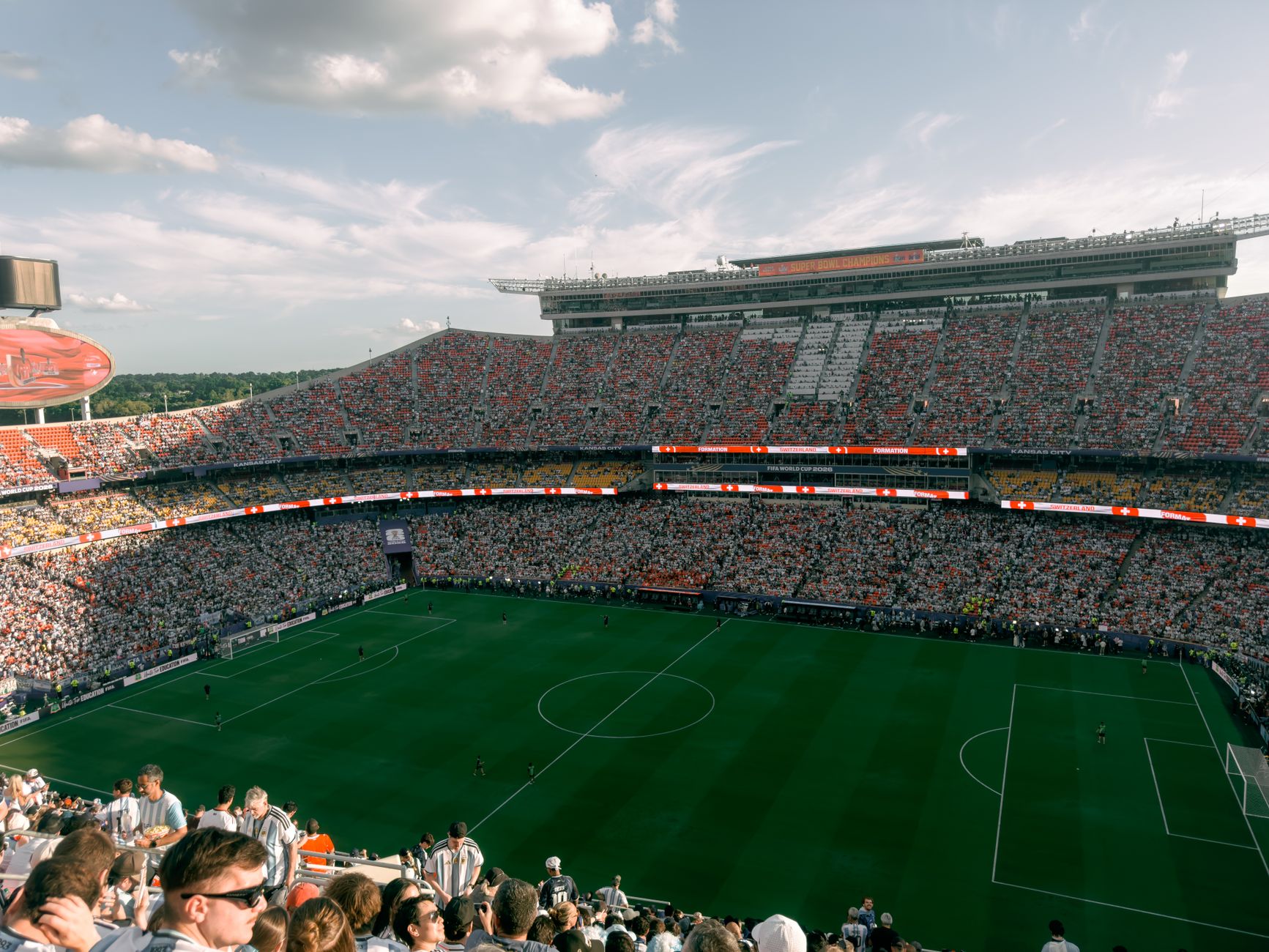
Photo by Allen Boguslavsky on Pexels
What Should Fans Expect From 2026 World Cup Football?
Fans should expect a larger, less predictable tournament in which squad depth and travel management become more influential than they were in the 32-team era. The 48-team structure gives emerging nations a broader route to the knockout phase, but it also creates a longer competition in which fatigue and rotation can separate champions from attractive early-round performers. The best analysis will combine tactical evidence with logistical facts.
The tournament’s scale creates several compelling storylines:
- Canada competing on home soil in an expanded global showcase.
- Mexico hosting World Cup matches for a third time.
- The United States staging games across multiple major venues.
- Argentina defending the title won in Qatar in 2022.
- France, Brazil, Germany, Spain, England, and Portugal entering under heavy scrutiny.
- African, Asian, and North American teams seeking deeper knockout runs.
Do not mistake a larger field for a lower standard. Morocco’s 2022 semifinal run, Croatia’s repeated deep performances, and Japan’s victories over Germany and Spain demonstrate that elite preparation can overturn reputation. The distance between a famous team and a dangerous outsider is often tactical, not mystical.
Stadium View’s daily coverage is most useful when it connects those stories to measurable evidence: lineups, formation changes, shot quality, player roles, and schedule conditions. The brand’s focus on predictions, team tactics, player statistics, and tournament reporting gives readers a practical way to follow the competition without surrendering judgment to “experts” who speak with absolute certainty about uncertain events.
Read our [Internal Link: 2026 World Cup host cities and stadium guide] before comparing teams, because venue context can reshape what the numbers appear to say.
The Verdict
World Cup football remains impossible to reduce to one superstar, one ranking, or one fashionable prediction. FIFA’s 2026 tournament will bring 48 teams, 104 matches, three host nations, and a new level of logistical complexity, making context more valuable than ever. The teams most likely to succeed will combine tactical flexibility, reliable availability, recovery discipline, and calm decision-making when the score turns against them.
My recommendation is direct: follow the evidence, not the noise. Start with team structure, verify the lineup, account for travel and weather, then consider historical quality and current form. If the evidence conflicts, do less rather than pretending certainty exists. That approach will not prevent every defeat; nothing will. It will, however, help you watch the world’s greatest tournament with sharper eyes and fewer expensive illusions.
See the latest tournament analysis and daily 2026 World Cup football coverage from Stadium View.
Frequently Asked Questions
Q: What is World Cup football?
A: World Cup football is FIFA’s men’s international championship contested by national teams from around the world. The first tournament took place in Uruguay in 1930, and Brazil holds the record with five titles. The 2026 edition will be hosted by Canada, Mexico, and the United States, with 48 teams competing across 104 matches.
Q: How can I analyse a World Cup football match?
A: Analyse a World Cup football match by checking tactical styles, confirmed lineups, injuries, recent competitive form, venue conditions, and tournament incentives. Start with how each team handles pressing and transitions, then examine player availability and travel. Use statistics such as expected goals and progressive passes as evidence, not as automatic predictions.
Q: What is the difference between the 2022 and 2026 World Cup formats?
A: The 2022 Qatar World Cup featured 32 teams and 64 matches, while the 2026 tournament will feature 48 teams and 104 matches. The 2026 competition will use 12 groups of four, with the top two teams and eight best third-placed teams advancing. A Round of 32 will precede the Round of 16.
Q: Is World Cup football prediction reliable?
A: World Cup football prediction can identify probabilities, but it cannot guarantee a result. International samples are small, lineups change quickly, and knockout matches can be decided by a deflection, red card, or penalty shootout. The responsible method is to compare several evidence sources and avoid treating any prediction as a certainty.
Q: What should I do if a World Cup lineup changes after I make a prediction?
A: Reassess the prediction immediately when a major lineup change occurs, especially if it involves the goalkeeper, centre-back leader, holding midfielder, or primary striker. A replacement may alter pressing triggers, set-piece duties, and defensive spacing. If the change removes the main reason for your original view, skipping the match is often wiser than forcing a revised selection.
Q: How much does it cost to follow World Cup football analysis?
A: Basic World Cup football news, fixtures, results, and many statistical resources are available free through FIFA and reputable sports publishers. Premium analytical services may charge subscription or membership fees, while gambling activity requires a separate personal budget. Stadium View provides tournament-focused content, but readers should check the current service terms and local legal requirements before spending money.
Q: Which teams have won the most World Cup football titles?
A: Brazil has won the most men’s World Cup football titles with five championships. Germany and Italy have four each, Argentina has three, France and Uruguay have two each, while England and Spain have one apiece. Brazil also holds the unique record of appearing at every men’s World Cup since the tournament began in 1930.