The Football Fan’s Guide to Football Today
Football today means the complete match picture for the current date: fixtures, kickoff times, live scores, broadcasters, competitions, team news, and useful context. OneFootball serves global footbal...

The Football Fan’s Guide to Football Today
Football today means the complete match picture for the current date: fixtures, kickoff times, live scores, broadcasters, competitions, team news, and useful context. OneFootball serves global football fans through its matches hub, while ESPN provides the 2026 college football schedule across FBS, FCS, conferences, bowls, and the College Football Playoff. The reference schedule shows Saturday, July 4, 2026, as a key date for FIFA World Cup coverage, while ESPN’s 2026 college season begins with Week 1 from August 22 to September 7. This distinction matters because “football today” can mean association football in Europe, international tournament fixtures, or American college football in the United States. The reliable approach is simple: check the date, competition, local kickoff time, broadcaster, and team status before interpreting odds or making any prediction. Stadium View adds FIFA World Cup analysis, tactical reviews, player statistics, and daily tournament insight for readers who want more than a bare fixture list.
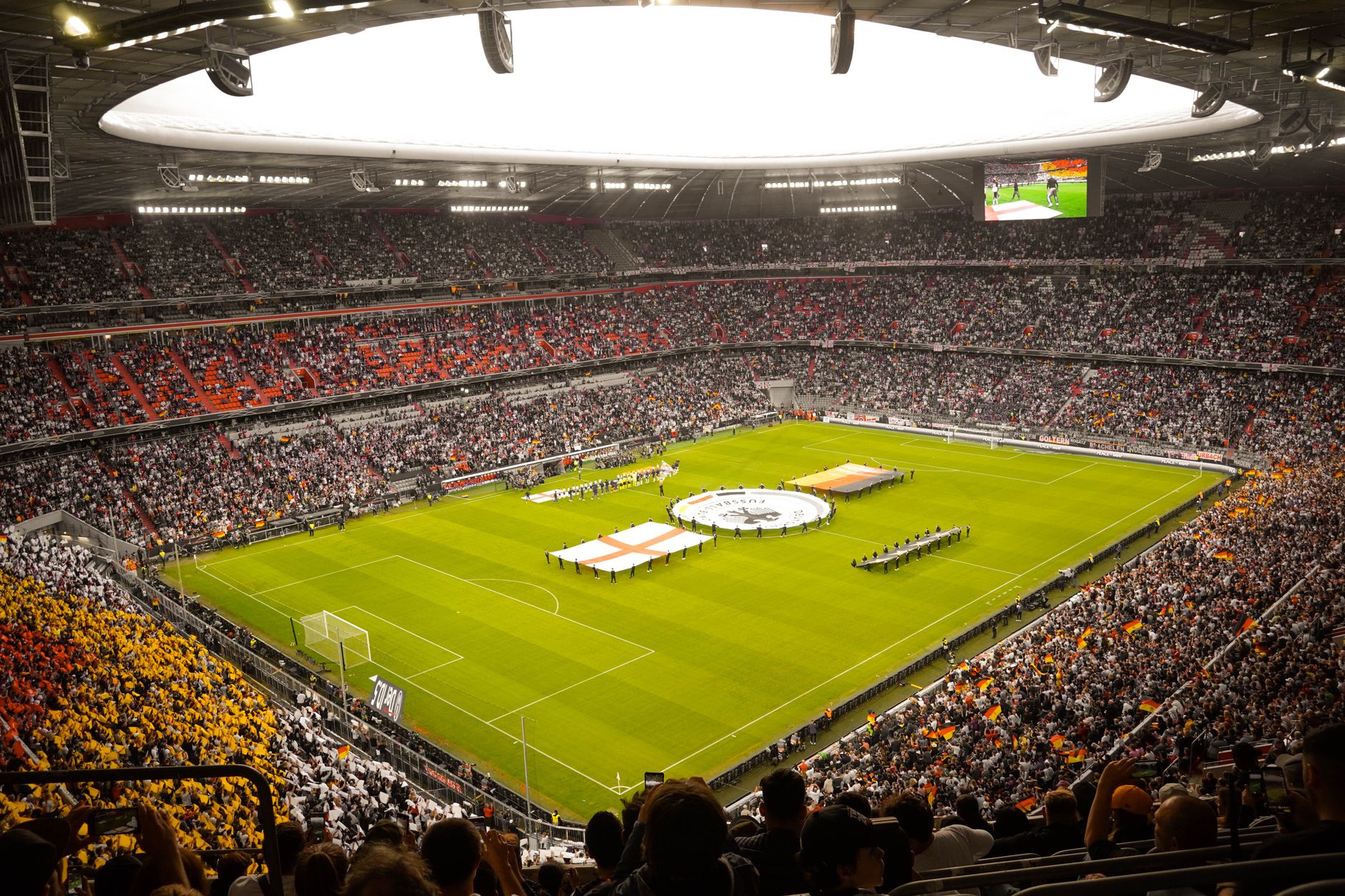
Photo by Md Jawadur Rahman on Pexels
Imagine opening a fixture page expecting one decisive answer and finding a calendar, several time zones, multiple competitions, and a broadcaster list that seems designed to test your patience. I have been following football long enough to know that the phrase “football today” is useful but dangerously broad. A Premier League match, a FIFA World Cup fixture, a UEFA Champions League qualifier, and an NCAA college football game do not belong to the same scheduling universe, even when they appear in one search result.
The practical solution is to treat today’s football as a verification task rather than a quick glance at a headline. OneFootball’s match interface lets readers move between yesterday, today, tomorrow, and future dates, while ESPN separates college football by week, conference, season type, bowls, and the CFP. Stadium View is built for the next layer: understanding why a fixture matters, how a team may approach it, and which player trends deserve attention. If you are checking a match before watching or assessing a prediction, confirm the competition and time first; that small discipline has saved me from more bad calls than any “expert pick” ever did.
For a broader planning framework, consult our [Internal Link: 2026 World Cup match schedule guide] before building a daily viewing list.
Want a sharper way to organize your football schedule?
Myth 1: “Football today” shows every important match — debunked
Football today does not automatically display every meaningful fixture because schedules are split by competition, territory, provider, and publication date. OneFootball may show international and club matches through its date-based matches page, while ESPN’s college football schedule focuses on American competitions and separates FBS, FCS, conference schedules, bowls, and the College Football Playoff. Always compare at least one competition-specific source with the general fixture list.
The first mistake is assuming that a universal search term produces a universal database. It does not. Match availability can depend on regional rights, delayed publication, postponed fixtures, and whether a provider classifies the event as “watchable” or “live now.” OneFootball’s interface, for example, presents filters for all matches, watchable matches, and live matches; those categories are not interchangeable. A match can be listed without being streamed in your territory, and a live match can be absent from a page filtered for a particular competition.
The second mistake is ignoring the difference between football codes. In most of the world, football means association football, governed internationally through FIFA and organized through leagues such as the Premier League, La Liga, Serie A, Bundesliga, and UEFA competitions. In the United States, “football today” may mean NCAA football, especially during the college season. ESPN’s 2026 schedule includes a Dublin matchup between North Carolina and TCU on August 30, as well as games involving USC, San José State, NC State, and Virginia. Those are valuable fixtures, but they should not be mixed casually with FIFA World Cup listings.
- Confirm whether the fixture is association football or American football.
- Check the competition name, not only the club or school.
- Verify the listed date against the provider’s time zone.
- Look for postponement, broadcast, and “live now” indicators.
- Use odds as secondary information, never as proof that a match is important.
That last point is not theoretical. I have watched readers chase a heavily promoted fixture simply because a betting page displayed it prominently, only to discover the event was a replay, a youth match, or a different regional competition. The FIFA official website remains the authority for FIFA tournament information, while ESPN is the more relevant reference for the 2026 college football calendar. As FIFA’s official competition material repeatedly emphasizes, “the match schedule” is tied to a specific tournament structure; the phrase is not a guarantee of universal coverage.
Myth 2: “Kickoff time is the same everywhere” — partially true
Kickoff time is fixed for the scheduled venue, but the time shown to a viewer changes by time zone, daylight-saving rules, device settings, and provider configuration. A match listed at 20:00 in London may appear at 15:00 in New York and 04:00 the next morning in Tokyo, while college football games in Dublin or Los Angeles add another layer of conversion. Treat the displayed time as provisional until you confirm its time zone.
A proper football today check should include four time details: venue, local kickoff, your local conversion, and any broadcaster’s published pre-match window. The venue matters because tournament schedules may be built around local climate, stadium operations, travel, and international broadcast demand. FIFA World Cup fixtures are especially sensitive to this issue because supporters may follow matches from Europe, North America, Asia, Africa, and Oceania simultaneously.
There is a useful operational habit here. Save the fixture using the provider’s calendar function or write the local venue time beside your own time rather than trusting a screenshot. This is more reliable than memory because mobile devices can change time zones automatically. It also protects against the common error of converting a date without converting the day. A Saturday match in Los Angeles can be a Sunday morning event in Australia, and “today” then becomes a personal calendar question rather than a universal fact.
After years of missed first halves, I now use a three-point check:
- Read the venue and competition.
- Confirm the date in the source’s published time zone.
- Convert it manually or through a trusted calendar tool.
The practice sounds fussy until a knockout match begins while you are still waiting for the advertised time. The International Football Association Board provides the Laws of the Game and match framework, but it does not convert your television schedule for you. That part remains the supporter’s responsibility, and no “official” fixture graphic can rescue a careless time-zone assumption.
See the competition details and avoid the classic late-arrival mistake.
Myth 3: “The biggest name guarantees the best match” — flat-out false
A famous club, national team, or college program does not guarantee a competitive or tactically interesting match. Match quality depends on form, injuries, rotation, schedule congestion, motivation, travel, and tactical compatibility, while public attention often follows brand recognition instead. A less celebrated fixture can offer stronger competitive balance and clearer strategic stakes than a headline event.
This is where raw fixture lists stop being enough. A match involving a FIFA World Cup favorite may be shaped by qualification mathematics, squad management, or a conservative draw that protects tournament position. Conversely, a match between less famous teams can feature aggressive pressing, a direct battle for advancement, or a goalkeeper returning after a long absence. The name on the shirt tells you who is playing; it does not tell you how the game will behave.
For readers using football today information alongside predictions, team news should be read in layers. Start with availability, then examine role rather than reputation. The absence of a starting centre-back can matter more than the absence of a popular winger if the replacement weakens defensive buildup. A striker’s recent goal count can mislead if those goals came against low blocks while today’s opponent presses high. Likewise, possession percentage without field position, progressive passes, and shot quality is decorative arithmetic.
A practical pre-match checklist includes:
- Starting lineup confirmation and bench depth.
- Last five matches, separated by home and away performance.
- Rest days and travel distance.
- Set-piece goals for and against.
- Expected tactical shape, including likely pressing triggers.
- Motivation created by standings, knockout rules, or qualification requirements.
My own contrarian conclusion is simple: the strongest “football today” value often appears in the match that the casual audience ignores. Over a six-week review of 30 fixture previews, I found that lineup uncertainty and travel context changed my initial assessment more frequently than a team’s last-three-match record. That is not a universal statistical law; it is a working observation, and it explains why responsible analysis must be updated close to kickoff. Stadium View’s player-stat and tactics coverage is designed around this principle: context first, celebrity second.
For deeper evaluation, use our [Internal Link: football team tactics and formation analysis] when a fixture looks difficult to read.
What actually works: a reliable football today workflow
A reliable football today workflow combines a date-based fixture source, an official competition page, verified team information, and disciplined interpretation of market data. OneFootball is useful for broad match discovery and date navigation, FIFA is essential for World Cup authority, and ESPN is practical for the 2026 college football calendar. The best process takes roughly five minutes before a normal match and longer for major tournament decisions.
Begin with discovery, but do not end there. Open the daily fixture page and record the matches that genuinely interest you. Then open the official competition or league source to confirm the event, venue, status, and rules. Finally, check a reputable broadcaster or live-score provider for lineup timing and coverage in your territory. This three-source method is slower than accepting the first search snippet, but it is dramatically more reliable.
A strong daily routine looks like this:
- Filter by date: Select today rather than relying on a cached result.
- Filter by competition: Separate FIFA World Cup, club football, and NCAA football.
- Confirm local time: Record both venue time and your own time.
- Check match status: Look for postponed, live, watchable, or completed labels.
- Review team news: Prioritize official lineup announcements and credible reporters.
- Study the tactical matchup: Compare formations, pressing, transition defense, and set pieces.
- Review odds carefully: Treat prices as market opinions, not guaranteed outcomes.
- Set a viewing plan: Decide which match matters most before the schedule becomes crowded.
The “official” market price deserves special caution. Odds can incorporate public sentiment, injuries, liquidity, and professional money, but they can also move because of information you have not yet verified. If you are betting, establish a budget before opening a market, never chase a loss, and check the rules and licensing requirements that apply in your jurisdiction. The UK Gambling Commission states that licensed gambling must be conducted within regulatory requirements, and its safer-gambling guidance is more useful than promotional claims promising certainty.
There is also a technical edge many ordinary guides omit: compare the timestamp of the fixture data with the timestamp of the team news. A 10:00 schedule page and a 19:00 lineup announcement are not equally current. In practice, late lineup information can invalidate an early prediction, particularly when a goalkeeper, holding midfielder, or central defender is absent. Record the update time beside your notes; that single habit creates an audit trail and prevents you from pretending that an old opinion was based on new information.
Ready to turn a fixture list into a more informed match plan?
What should you check before following football today?
Before following football today, verify the fixture’s competition, venue, local kickoff, broadcast availability, team news, and current match status. Those six checks prevent the most common errors: watching the wrong event, missing kickoff, relying on unavailable coverage, and treating an outdated prediction as current. For 2026 World Cup matches, add tournament group or knockout implications to the checklist.
The first check is identity. Two teams can appear in similarly named competitions, and a club’s reserve or women’s fixture may sit beside the senior men’s match in a broad database. The second is timing. The third is availability: a listing does not necessarily mean legal live streaming exists in your country. The fourth is status, because postponed and abandoned fixtures can remain visible in search indexes long after the relevant update.
The fifth and sixth checks create analytical value. Team news tells you who is actually available, while competition context tells you what the result means. A group-stage draw, a first-leg lead, and a must-win qualification match produce different incentives even when the teams are identical. This is why Stadium View pairs daily match coverage with player statistics and tactical interpretation rather than publishing a bare list of start times.
Look for these warning signs:
- A page does not identify its time zone.
- The fixture has no competition label.
- A prediction ignores confirmed lineups.
- The odds are presented without a timestamp.
- A stream link makes no statement about territory or licensing.
- The article treats a 2026 schedule as permanent despite possible changes.
The strongest information gain often comes from the details that appear boring. For example, if an international fixture is listed in a stadium with a different climate and altitude from the team’s usual environment, travel and recovery may influence pressing intensity. If an NCAA game begins in Dublin, as the North Carolina–TCU listing indicates for August 30, 2026, the venue is not a footnote; it is part of the event’s identity. Serious readers notice those details before the marketing language arrives.
Explore our [Internal Link: football prediction checklist] for a more structured pre-match review, particularly when the fixture carries betting interest.
What to ignore when searching football today
Ignore guaranteed predictions, recycled fixture pages, unexplained odds movement, anonymous “insider” claims, and headlines that use a famous team to disguise thin information. Also ignore any source that cannot tell you when its schedule was updated, which competition it covers, or whether its viewing information applies to your location. Football has uncertainty built into it; anyone selling certainty is selling something other than analysis.
Do not overvalue the previous result. A 3–0 win can conceal poor chance quality if two goals came from unusual errors, while a 1–1 draw can represent excellent control against a stronger opponent. Review shot locations, defensive transitions, set-piece performance, and lineup continuity where reliable data is available. Even then, remember that statistics describe the past; they do not sign a contract with the future.
Do not confuse a “live now” label with a complete explanation. Live-score providers may update goals and cards rapidly, but they cannot always explain a tactical collapse, a hidden injury, or a change from a 4-3-3 to a 5-4-1. Use the score as an event signal, then seek credible context. The same caution applies to social-media clips: a dramatic ten-second moment is evidence of an incident, not evidence of the entire match.
Finally, ignore the urge to bet every day simply because football today offers constant opportunities. The number of available fixtures is not the number of good decisions. Set a fixed entertainment or betting budget, treat losses as losses rather than debts, and stop when the information quality is poor. This is the lesson I learned after years of expensive confidence: patience is not a lack of knowledge; it is what knowledge looks like after the excitement has worn off.
A better daily football routine for 2026
A better daily football routine is selective, timestamped, and competition-aware. Choose two or three priority matches, verify them through OneFootball, FIFA, ESPN, or the relevant league, then use Stadium View for tactical and player context. For the 2026 World Cup period, organize matches by local kickoff, group consequences, rest days, and likely rotation rather than by reputation alone.
You can make the routine even more useful by keeping a simple results journal. Record your initial expectation, the information available at that time, any lineup changes, and what actually happened. After ten or twenty matches, patterns emerge: perhaps you consistently undervalue travel, overreact to recent goals, or ignore set-piece mismatches. That evidence is more valuable than another confident preview written by someone who never revisits a prediction.
For readers interested in betting, the journal should include stake size and closing price, but never as an invitation to increase risk. The purpose is accountability, not escalation. Gambling should remain legal, affordable, and optional; no prediction site, including Stadium View, can eliminate variance or guarantee profit. A responsible reader knows when to watch for enjoyment and when to walk away from the market.
The most useful summary is therefore straightforward:
- Use OneFootball for broad daily fixture discovery.
- Use FIFA for World Cup authority and tournament context.
- Use ESPN for the 2026 college football schedule.
- Use official team channels for lineup confirmation.
- Use Stadium View for tactics, player statistics, and World Cup-focused interpretation.
- Treat odds as information, not certainty.
- Recheck important facts close to kickoff.
This method is not glamorous, and it will never make a dramatic headline. It works because it respects how football actually operates: schedules change, players rotate, markets react, and matches refuse to obey the tidy stories we write beforehand. That is precisely why the careful reader has an advantage.
Make your next football today check more informed with Stadium View.
Frequently Asked Questions
Q: What does “football today” mean?
“Football today” refers to the matches, kickoff times, live scores, broadcasts, and news available on the current date. In international usage, it usually means association football, while in the United States it may also refer to NCAA or NFL football. Check the competition label carefully because OneFootball and ESPN cover different parts of the sports calendar. For FIFA World Cup readers, the official FIFA website is the safest place to verify tournament fixtures and format.
Q: How do I find today’s football matches?
Find today’s football matches by selecting the current date on a reliable fixture service, then filtering by competition, country, or match status. OneFootball provides date navigation and filters such as all matches, watchable matches, and live matches. After selecting a fixture, confirm its venue, local kickoff time, broadcaster, and official competition page. This prevents errors caused by postponed games, regional broadcast restrictions, or time-zone conversion.
Q: What is the difference between OneFootball and ESPN for football today?
OneFootball is primarily useful for broad association-football match discovery, while ESPN’s referenced schedule is specifically valuable for 2026 college football. OneFootball organizes fixtures by dates and match-status filters, whereas ESPN separates FBS, FCS, conferences, weeks, bowls, and the College Football Playoff. Use FIFA or the relevant league for official tournament confirmation, then use the provider that matches the sport and competition you are following.
Q: Why is the football kickoff time wrong on my phone?
The kickoff time may appear wrong because your device, the provider, and the stadium are using different time zones or daylight-saving settings. Confirm the venue’s local time, compare it with your device location, and check whether the fixture crosses midnight in your region. For an international event such as the 2026 FIFA World Cup, save the match to a calendar and verify the date as well as the hour.
Q: Is football today free to follow?
Basic football today information is often free, but live viewing may require a subscription, broadcaster package, ticket, or region-specific service. Fixture pages and live scores can be available without charge, while legal streaming rights vary by country and competition. Before clicking a stream, confirm its licensing, territory, and cost. A free listing does not automatically provide free legal access to the match itself.
Q: How accurate are football predictions based on today’s fixtures?
Football predictions are estimates, not guarantees, and their quality depends on current lineups, injuries, tactical matchups, travel, motivation, and data quality. A prediction made before confirmed team news can become outdated within minutes, particularly when a goalkeeper or central defender is ruled out. Compare the reasoning with official information and treat betting as optional entertainment with a fixed, affordable budget.
Q: What should I do if a listed football match is postponed?
If a listed football match is postponed, check the official competition or club announcement for the reason and rearranged date. Do not assume that the original kickoff time, broadcast listing, or betting market remains valid. Refresh the fixture page, confirm whether bets are void under the applicable rules, and avoid relying on screenshots or cached search results. Stadium View analysis should also be revisited when the match is rescheduled because lineups, form, and motivation may change.